What is the appeal of film photography?
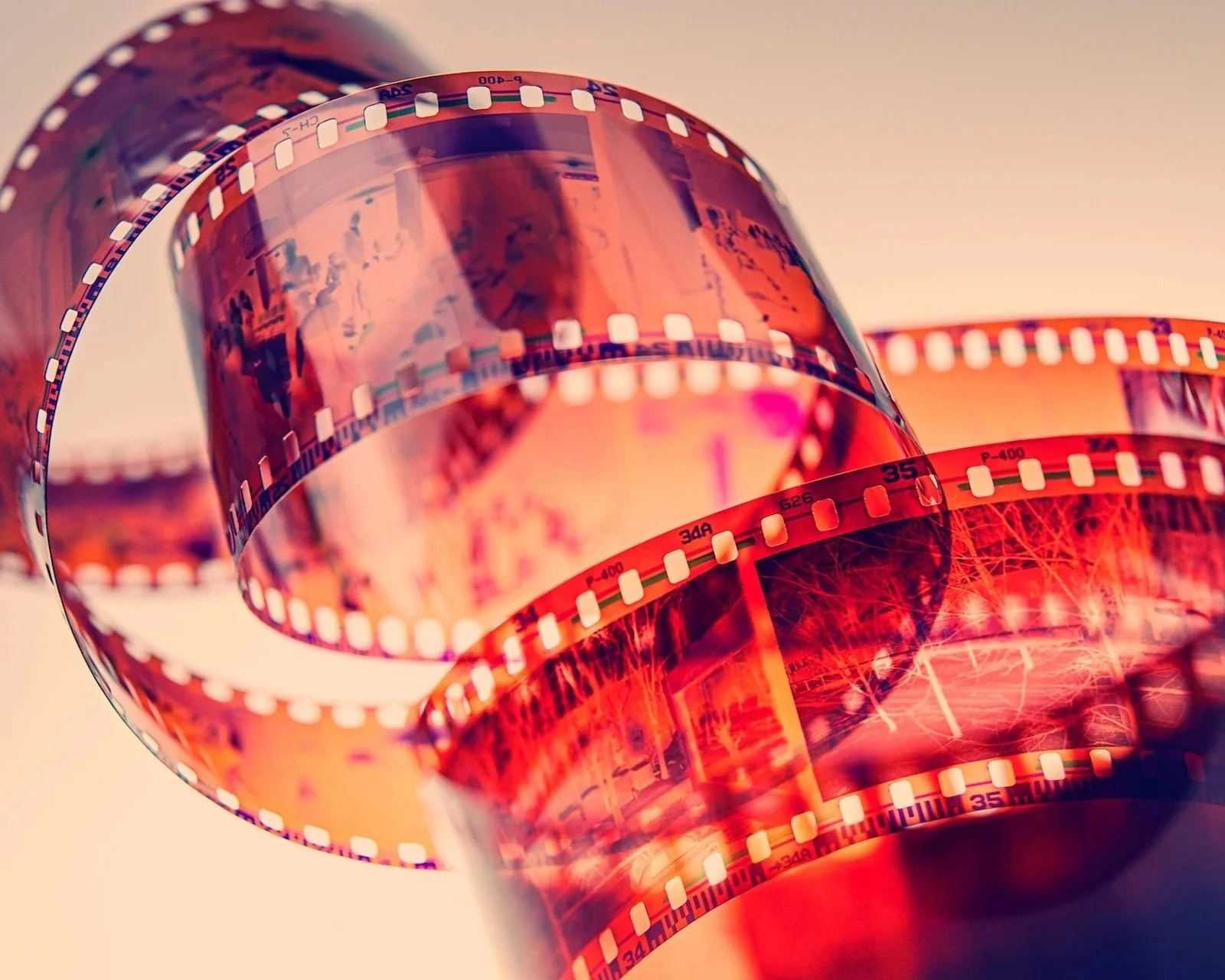
What is the appeal of film photography?
People will say that they love the process of shooting film. Film slows down the process of photography; you take fewer pictures, take time to think and compose the shot... Some people will even say that you are not a real photographer until you have shot and developed your own roll of film; capturing the light on the fragile cellulose acetate, developed it in a darkroom, then reversed the process by printing your photograph, allowing the captured light to be projected and transferred to light sensitive paper and released via chemicals as an image... the complete end to end cycle of painting with light.
What I do know is, that since my son encouraged me to try film, it has become a prominent and intoxicating expression of creativity for me. One that is rewarding and challenging, a process of learning craft, being patient and just enjoying the experience of photography with no electronics; just a mechanical click of the shutter and feeling the turn of the film as you wind it to the next frame.
Photography has become the primary form of capturing a moment. Whether you take a photo on your phone and share it on social media or video a clip for Tik Tok, digital photography makes it easy and accessible. But there is something more inherently intimate and artistic about film. With digital you can capture images, still or video, till your battery dies, changing settings as you go, edit them in Lightroom or Final Cut Pro and manipulate them further in Photoshop; you don’t have that luxury with film, at least not right away. Everything is intentional; your choice of film and how you push or pull it all comes into play.
In short, it’s imperfect, messy, and with careful control, you sometimes you get a good piece. And that’s why I love it!
Sometimes the pictures themselves don’t come out well. Maybe they’re slightly out of focus or too dark. Maybe the grain is a bit too much. Or perhaps the films are old, so the scans aren’t too great. Other times, the frames are exquisite. Everything is on point, from the focus to the metering. And you did it! Not any electronics or algorithms. Just you, the camera, the film, the subject and the light. And that is really cool!
There are a lot of inherent problems that come with film, from the cost of buying the film stock, making sure the settings are right, and the time and process of getting it developed. I can understand why people don’t want to deal with the headache, especially in this content driven world where you want to shoot as much as you can and share it instantly.
That is what makes film such a creative and enriching activity since, in a sense, you have to be dedicated to “outdated” processes in order to bring the art and craft of photography to life. And because of all the little idiosyncrasies, it has a charm that is edgy and nostalgic.
Since the first photograph captivated the world in the early 1800s, the medium has grown more powerful, and more accessible, as the tools of the trade have changed. From early daguerreotypes to tin types to Polaroids, what’s different about today’s digital tools is that they’ve enabled photography to become part of everyday life.
While digital photography offers instant gratification and the ability to bring professional tools to your fingertips, it hasn’t made past techniques obsolete.
More photographers are putting down their smartphones or DSLR cameras in favour of shooting the old-fashioned way. (In fact, some never stopped shooting with film in the first place). Like vinyl, typewriters and other analog tech, film has an enduring, authentic appeal for professionals and amateurs alike.
If you wax nostalgic about holding printed photos in your hands, you might understand why photographers are eager to relive a time before the instant gratification of the smartphone selfie.
For some photographers, traditional photography never went out of style. Analogue photography has been around for over a century, whilst Digital, is new and still in the process of being perfected, the digital image not really matching the quality of film.
Some say the tangibility of processing film is also important; working with film, looking at negatives and taking the time to make prints. The labour of it is an important part of the process. Once you see your negatives for the first time, and get your first prints back, you’ll see a little bit of that magic.
Shooting with film isn’t that different from digital. Photographers still control their work by manipulating the holy trinity of exposure: shutter speed, aperture and ISO sensitivity; they just do it manually instead of relying on digital tools to optimise these factors automatically. And you can’t immediately check and adjust your work on the camera screen.
But while film might make the process a little slower, many photographers argue there’s something romantic about that. Because film has limited exposures, photographers are forced to use every frame judiciously. It’s not like a memory card being able to shoot hundreds of photos and hope that a couple of them turn out. You have to think about every shot beforehand, activating your creativity.
Along with the creative possibilities, and constraints, that come with film, the low-fi, real-world aesthetic appeals to photographers. There’s surely something romantic about that dreamy vintage veneer you often associate with family photo albums and hand-scrawled captions.
These days, “film grain” is an aspirational look that you can apply to your digital photos via an Instagram or VSCO filter. The aesthetic nature involved in the organic way that grain populates a piece of film or photographic paper differs from the ordered way that pixels work in a digital image, There are people who would rather have a physical book than an e-book, and I think it’s similar with film. Applying a filter isn't the same as carefully composing and taking the photo, then waiting for development and scanning. The beauty of film is, for the most part, what you see is what you get...
“No place is boring, if you've had a good night's sleep and have a pocket full of unexposed film.”
~ Robert Adams